
Inspired Stuffed Cabbage: Spilled Milk #399
Stuffed cabbage is one of the world’s great comfort dishes, shaped by thrift, patience, and the simple promise that time makes things better. This recipe borrows freely from several traditions.

Today’s newsletter includes:
Why stuffed cabbage shows up in so many global food traditions
How cabbage rolls evolved from survival cooking into comfort cuisine
A flexible stuffed cabbage recipe that borrows from multiple cultures
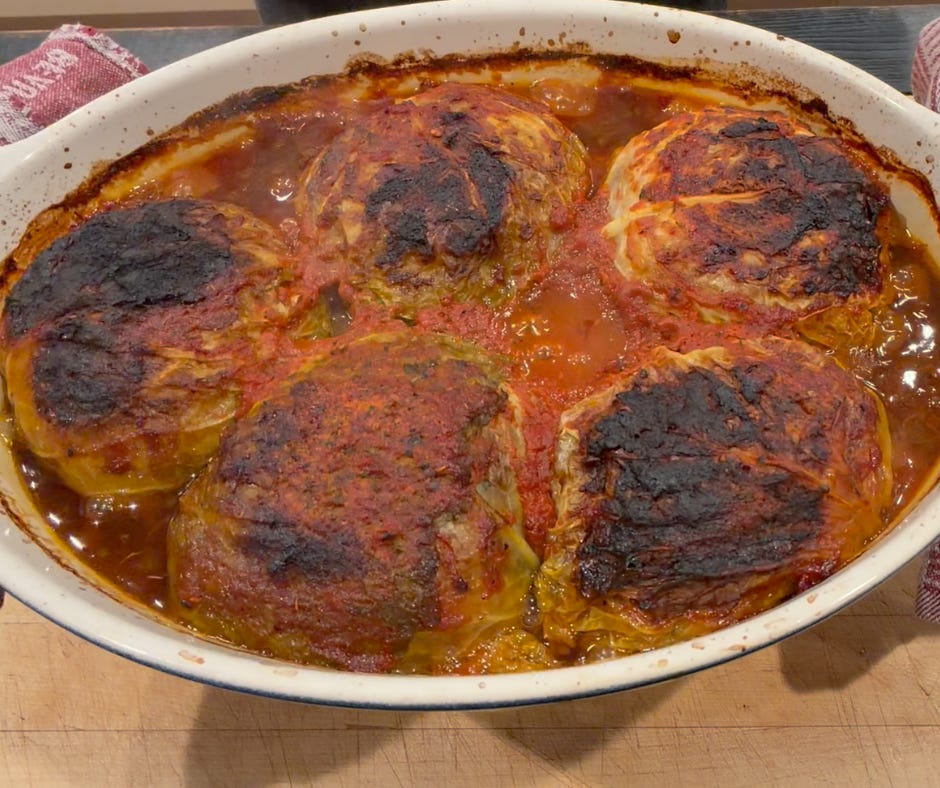
A New Stuffed Cabbage
Stuffed cabbage is proof that thrift, patience, and a large pot can feel like luxury. Across continents and generations, it has turned scarcity into abundance and routine cooking into ritual. This recipe pulls from several traditions and treats technique as a canvas, not a rulebook.
Stuffed Cabbage as Global Comfort Food
Stuffed cabbage begins with a leaf. Not the polite, baby greens we worship now, but the big veined armor of mature cabbage, blanched into submission, peeled like pages from a well-read book. What follows is one of the great global conspiracies of comfort. Take whatever you have. Wrap it. Simmer it. Feed everyone.
Its deepest roots are in Eastern Europe where stuffed cabbage became a winter religion. In Poland, they are golabki, little pigeons tucked into tomato sauce. In Ukraine, holubsti arrive scented with dill and sour cream. In Romania, sarmale are turned small and tight, pork and rice wrapped in pickled cabbage leaves, slow cooked until the house smells like survival. Jewish kitchens carried holishkes across borders and oceans, sometimes sweetened with raisins and sugar, sometimes sharpened with lemon. These dishes share a moral code. Meat is precious. Rice stretches it. Cabbage protects it. Time improves it.
Keep reading with a 7-day free trial
Subscribe to Andrew Zimmern's Spilled Milk to keep reading this post and get 7 days of free access to the full post archives.